Friday, 23 June 2023


In Spain after Anne Aylor’s ‘novel intensive writing retreat’, and inspired by the participants’ great writing, I have been working on my third book, working title “My Music World”. “My World Café’ was about food and memory and this is about music and memory. Here is a taster


WHEN THERE”S  ‘PAIN IN MY HEART’, ‘GET UP,  STAND UP’


-“When music hits you, you feel no pain” Bob Marley


I have always been drawn to musicians who sing their troubles. That tells you as much about me as it does about their music. In the 60s I was an addict of American Blues singers, agreeing with Leon Redbome that ‘the Blues ain’t nothing but a good man feeling bad.’ I guess I am drawn to the way Blues takes sorrow and turns it into an emotion that can be life-enhancing.


I made sure never to miss the London gigs of Delta and Chicago Blues musicians when they came to the UK. Black musicians had always received a more friendly welcome in Europe than they got back home in the US. In the same year that Miles Davis recorded A Kind of Blue he was beaten up by NYC cops. Not long afterwards he was in Paris to receive the Legion ‘d’honout from France’s Culture Minister. His contemporary, saxophonist James Moody, moved to Sweden, fed up with ‘being scarred by racism’ in his own country.


The night before their main London gigs at the Marquee, the American Bluesmen and women would stage a ‘rehearsal’ gig at south east London’s Bromley Court Hotel. Among earlier visitors had been the Duke of Wellington and Charles Darwin, but I was there to see  Muddy Waters, John Lee Hooker, Howlin' Wolf, Sony Boy Williamson and Bo Diddley. Many female Blues artists as well. I was sorry to have missed Sister Rosetta Tharpe was on the bill with Muddy Waters, for his 1964 European tour, but caught the flu when in Manchester and didn’t join him in London. Watch her singing ‘Didn’t it Rain, standing in her coat on a wet and windy Manchester station platform. I guess it was that gig that must that made her ill. Female Blues’ artists are often overlooked. We’ve all heard ot Aretha Franklin, but what of Koko Taylor, sometimes called ‘The Queen of the Blues’, and known for her rough, powerful vocals, and Big Mama Thornton? Her ‘Nothing But a Houndog’ stands alongside Elvis’ version. 


South east London has strong connections to both Blues and rock ‘n roll musicians. David Bowie spent his childhood in Bromley and Mick Jagger, Keith Richards, Brian Jones, Bill Wyman, and Charlie Watts, all came from Dartford, on  the edge of southeast London and were to play an important part in promoiing the Blues. They never played at the Bromley Court, but I remember travelling to Richmond to see them at Eel Pie Island. I found them a bit tame and preferred The Pretty Things. They were punk 15 years before The Clash and The Sex Pistols. Their vocalist, Phil May, had been at Sidcup Art College with Mick Jagger, but there they parted. Chris Morris says that The Pretty Things had “A noise that made the early Stones sound like tea-sippers.” I agreed and remember going to their gigs and lying on the dusty floor like an upturned turtle as they performed ‘Don’t Bring Me Down’. 


Monday 11 December 1967 was another rainy day  and I skipped my sociology lecture at Essex University to take the bus into Colchester from the campus to buy Otis Redding’s album, ‘Pain in My Heart.’ 


That morning I’d heard that he had been killed the day before when his plane crashed into Lake Monoona, Wisconsin. I wanted to honour him. I already had three of his singles, ‘Dock of the Bay’ , ‘These Arms of Mine’, and “Try a Little Tenderness”, but on this day I wanted to listen to more of his music.


The year after Otis’ death Percy Sledge released ‘When a Man Loves a Woman’ which included these words: “If she is bad, he can't see it. She can do no wrong.” He claimed the original title was ‘Why Did You Leave Me Baby’, but changed it to ‘When a Man Loves a Woman’. “I just reversed it”, he said. “ The song is about potential devastation. You only hope there's going to be a happy conclusion.”


My introduction to reggae music came with first hearing Bob Marley’s  ‘No Woman No Cry’. I thought the song’s title was a reference to the relief of not having a woman in your life —  “No woman, no cry’.That tears came with the woman. The song first appeared in his 1974 album, Natty Dread, and I played it over and over again. 


It was composed by Vincent Ford, a friend of Marley’s who ran a soup kitchen in Trenchtown, where Marley had grown up. Royalties from the song went towards the running of this meals programme. Many years later I learned that my interpretation of the song had been mistaken. The correct punctuation is not ‘no woman, no cry’, but ‘NO woman. NO cry.’ The title is alluding to encouraging women not to cry. Marley’s bassist in The Wailers, Aston Barrett, said, "The song is about the strength in the mama of course, strength in the ladies. And we love a woman with a backbone. Something like a wishbone! They have to be like a she-lion! Woman strong, you know, not depending on the man.”


I thought the song was an expression of the trauma in my own relationship with a woman — my first wife Renata. She was certainly a she-lion and I spent years trying to escape her claws, hoping for a ‘happy conclusion’. When the song was released in 1984 on the Legend album it appeared with ‘Could you be Loved?’ ‘Get Up, Stand Up’,  ‘Redemption Song’, ‘Exodus’ and ‘One Love’. In the next few years I did all that. Questioning whether I loved and could be loved, standing up, an attempted redemption and an exodus. Finally moving into a new ‘one love’ relationship. A move from anguish and anger to a woman with backbone who would also be my wishbone. “One love, one heart, Let's get together and feel all right.” 


Marley has remained at the centre of my world for sixty years, and I am proud that his words are inscribed next to my image in the entrance to Mostar’s Pavarotti Music Centre


Towards the end of my time in Bosnia I helped smuggle into besieged East Mostar, Island Records’ Marley photo exhibition. They were hidden under bread crates. The local ‘war radio pulsed out his songs for the ten days the exhibition was in town; which was mounted in a cellar on the front line. 


Even after I left Mostar I helped bring reggae music into town. In 2001 we brought roots-reggae artist, Horace Andy, there. Pain again. His singing is full of anguish, the minor key to Marley’s major. His performance with Massive Attack in Hyde Park in 2016 is memorable as he sang from a wheelchair because of his broken leg. 


So much music is about overcoming pain, or at least learning to live with it, and there is always the need for tenderness …”But It’s all so easy, all you got to do is try, try a little tenderness.”


My World Café


Left Field


Friday, 19 May 2023

My World Café - a delicious read


19 May: A great evening of readings from My World Café at


Bookmarks Bookshop with a discussion led by Jan Woolf. Here is


Jan with three 'chapters' from my book,, Anne Aylor, Alaistair


Hatchett and Ken Livingstone. Thank you Ursla Hawthorne (2nd 


photo) and Bookmarks Bookshop for hosting the evening.


Great to meet old friends who remain good friends. You can buy

the book at Bookmarks and other London bookshops, or order

from Riversmeet.


"Lovely stuff from the author's swag-bag: traveller's

tales and gorgeous drawings plus liver and bacon.

What more could anyone want?" Elisabeth Luard,

food writer and broadcaster


"In David Wilsons 'My World Café', we cross time and 

space as we joyfully consume our way through a plethora 

of chapters on recipes which mark the stages of David's 

extraordinary life crisscrossing the earth, and all rooted 

in his socialist politics”  Merilyn Moos,: author of

 'Breaking The Silence', 'The Language of Silence', 'Beaten but not

 Defeated' and 'Anti-Nazi Germans'


"Eclectic, delightfully eccentric, historical, political

and mythological. Generously illustrated with Laura

Davis' charmingly quirky drawings. Altogether a

delicious thing." Lesley Glaister, writer and

reviewer

"We totally love your book.  You brought back memories of Mervyn 

Levy and Gustav Delbanco.  My god, those guys...."  Michael Walling,

 artistic director, Border Crossings  


BUY IT HERE:


Riversmeet Productions:  “Our third book is My World Café with

words by David Wilson and illustrations by Laura

 Davis.

A stew of food stories, memories and recipes from around the world,

 ranging from popcorn to borscht, apple strudel to burritos, baklava to

 teriyaki. Each chapter includes a brief history of the food, a personal

 memory and a recipe.’


(Maureen Casey, Laura Davis, Anne Aylor, David Wilson & Richard Bradbury at London launch on 30/11/22)

David Wilson is a writer and political activist whose work draws upon

 an extraordinary range of experiences throughout a long and varied

 career as a teacher, art agent, filmmaker and aid worker. He was

 involved with setting up a war-time mobile bakery that fed the

 starving people of Mostar and went on to be the first director of the

 Pavarotti Music Centre in Bosnia, whose patrons included Luciano

 Pavarotti, David Bowie, Brian Eno and Tom Stoppard.


Laura Davis is an artist, printmaker, illustrator and graduate of

 Glasgow School of Art and Edinburgh College of Art. Her inspiration

 comes from folk and outsider art, and from observations of life and

 nature.”


You can order My World Café on the Riversmeet websiteUK price:

 £12 inclusive of postage & packing. Non-UK price: £13.50, inclusive

 of pp  


It's also on sale  at Bookmarks, Bloomsbury St, London, Housmans at 

Kings X, The Owl bookshop in Kentish Town  and at Word on the 

Water on the Regent's Canal at York Way


Camden New Journal review HERE

A big thank you to Camden New Journal for this article. I just want to

say that: 1) I did not write about the historic problems with War Child,

2) I did not convince music stars to record for the HELP

 album, that was was Brian Eno, and 3) The Pavarotti

 Music Centre is better known for rock music than

 classical. NOTE: For Londoners, 'My World

 Café' can be bought at the Owl bookshop in

 Kentish Town and online using the Riversmeet link.


International Times review HERE  


My World Café is David’s second book. Left Field: The Memoir of a

 Lifelong Activist was published by Unbound in 2016. 


Praise for Left Field


“David has lived a life and a half. The broken world needed people

 like David; it still does.”—Sir Tom Stoppard 


This is an excellent and inspiring book. David is an adventurer and a

 freethinker, who did something truly useful with his life.”—Brian Eno


The London launch took place ar Made in Brasil on 30 November, Thank you Riversmeet, Haifa Zangana who returned from Tunisia to be there and Deicola Neves who flew in from Spain. Also all who came to join me there. A great night.


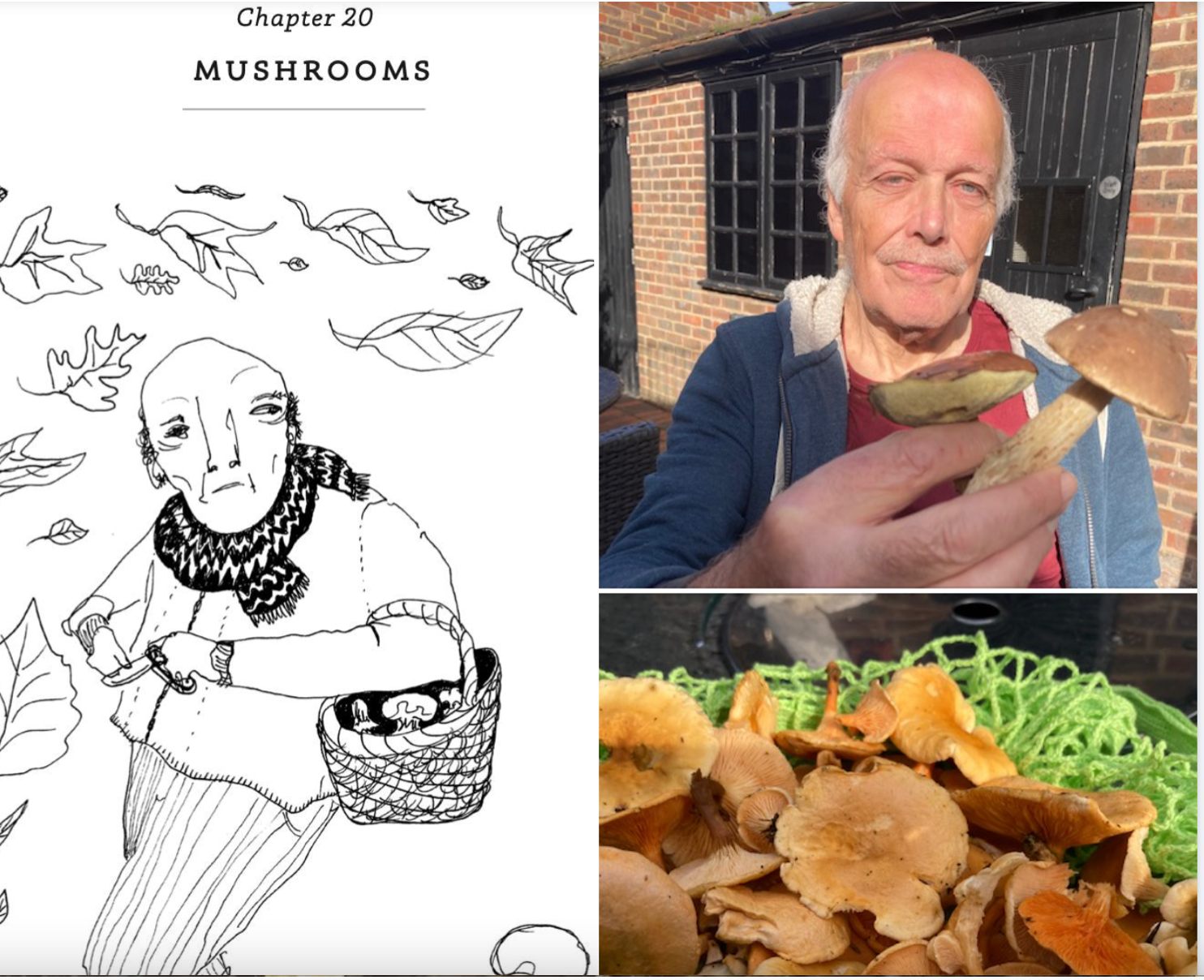
I am delighted to say that several people who feature in the book were at the London launch at Made in Brazil on 30 November: Jim Brann, who helped me with the mushroom chapter, Haifa Zangana with tepsi baytinjan, an Iraqi recipe, Sebastian and Gráinne Balfour with Catalan calçots, Jan Woolf with courgette pie, and  Anne Aylor with popcorn, as well  as  fulfilling her role as my Gordon Lish. Finally Deicola Neves with Brazilian picanha and he played guitar. Check him out on this link. 


From author/artist Jan Woolf  - http://www.janwoolf.com/

It's a fine read - food, politics, activism. David Wilson writes beautifully and the illustrations by Laura Davis dance on the page. Oh, and me and my courgette pie are in it!


What readers are saying about MY WORLD CAFE

"Lovely stuff from the author's swag bag: traveller's tales and gorgeous drawings plus liver and bacon. What more could anyone want?" Elizabeth Luard, broadcaster and food lover

“A worldfest of a book - a tribute to the bonding power of shared food as a force for enlightenment. The book’s Rabelaisian gusto put me in mind of Proust’s madeleine - of the joyous childhood pleasures of picking mushrooms before breakfast with my Irish grandmother and foraging for berries to make the juicy summer puddings you describe from your youth.” Edwin Maynard

"Take odes to the pleasures of shared eating and season with nuggets of nutrition, politics, philosophy, travel, biology, biography, botany, history, geography, cooking … and you have ‘My World Cafe’. Enjoy.' " Jim Brann

“ ‘My World Café’ tells the stories of David Wilson’s favourite meals and recipes and is filled with a warm blend of stories of friendship, history and politics along with dishes enjoyed around the world including liver-and-bacon, borscht, strozzapreti and goulash.” Camden New Journal

“ ‘My World Café ’ is a celebration of something as necessary to our survival as oxygen and love. Each recipe is delivered in the company of a person important to him, the memory of taste heightening the memory of that person and place, with the history of the food folded in like a delicious batter.” Jan Woolf, International Times

“In ‘My World Café we cross time and space as we joyfully consume our way through a plethora of chapters on recipes which mark the stages of David's extraordinary life crisscrossing the earth, and all rooted in his socialist politics.” Merilyn Moos, author of 'Anti-Nazi Germans'

“Eclectic, delightfully eccentric, historical, political and mythological. Generously illustrated with Laura Davis' charmingly quirky drawings. Altogether a delicious thing.” Lesley Glaister, writer and reviewer

“We totally love your book. You brought back memories of Mervyn Levy and Gustav Delbanco. My god, those guys….” Michael Walling. Artistic director, Border Crossings

“An enjoyable journey of meals the author has eaten that stretch deeply in each country's history. A book full of stories and recipes spiced with the warmth of friendship.” Haifa Zangana

“Wow! What a life...such lovely illustrations too.” Inga Baystrom

“What a rich medley of food, politics, travel and interesting people !I am determined to try some of the recipes. A lovely book.” Carol Ritchie

“It makes a great read.” Anthea Norman-Taylor

“You have found a brilliant way of being able to bring so many great stories together.” Diana Boyer

"I have really loved 'My World Café' - so full of life and warmth, and a wealth of cracking anecdotes”. Annemarie Nearly

"He has been eating (and drinking) with me at my home for over 25 years. When with us he completes my family. As he says, along with the lamb, “there is always music, singing and tavla. See you soon David." Orhan (Oha) Maslo

****************

contact author at david@davidwilson.org.uk 


Send your photo to me at: david@davidwilson.org.uk or to Riversmeet at; maureen.casey2@btinternet.com


Gillian Howell, Melbourne


Thursday, 18 May 2023

Lord Trout


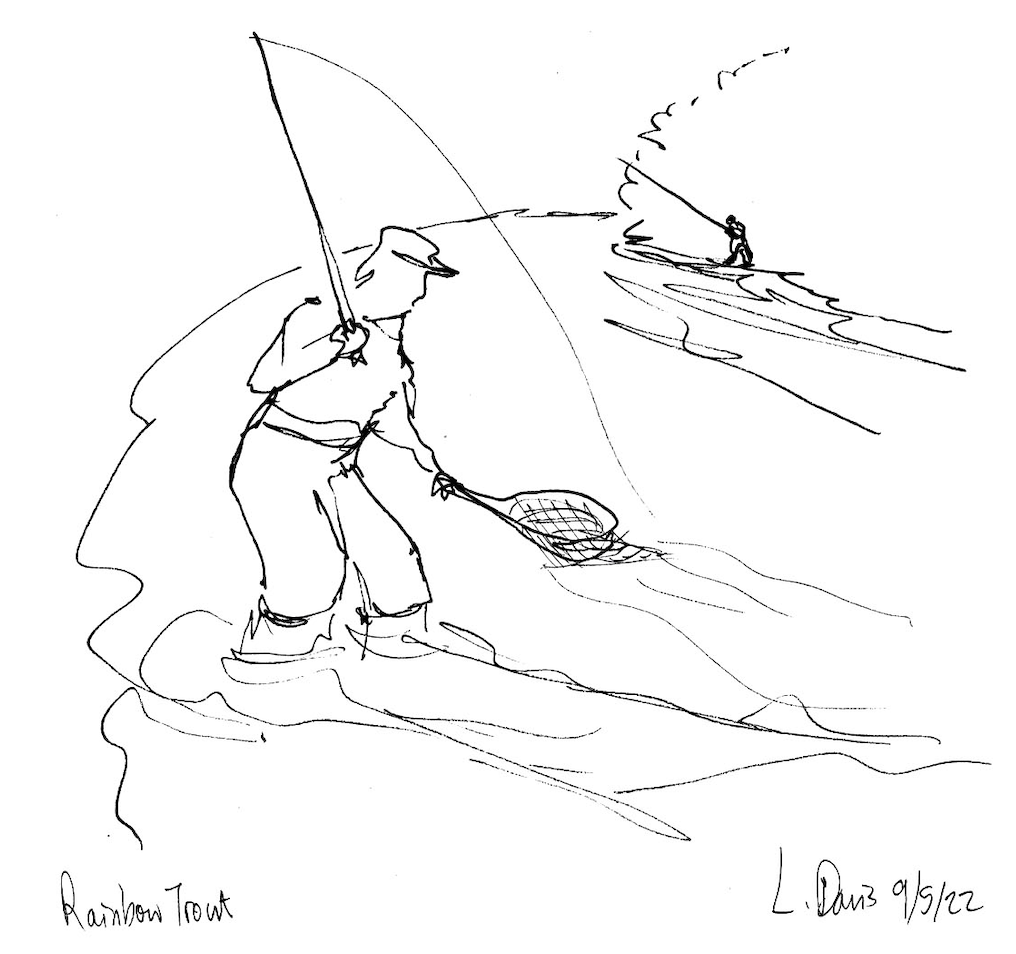
Here is the redacted version of a food chapter left out of 'My World Café'. Names of people and places have been changed. Drawing by my wonderful illustrator, Laura Davis.


RAINBOW TROUT

My childhood years in London were a time of post-war food rationing, but there was no shortage of fish. During war time, sea fishing had been restricted and afterwards our coastal seas had plentiful shoals.

Every week my mother fried cod, haddock, skate or plaice, but I remember clearly my first memory of eating fish out of the home. I was seven when my father took me to a fish and chip shop in Bromley High Street. I was fascinated by the gurgling oil vats and the smell of sizzling fish. He ordered battered cod for both of us, the chips wrapped in a page from the Daily Mirror; paper cone sprinkled with salt and dribbled with vinegar.

This will have been common to many readers of my generation, but few will have eaten other sea fish such as salmon, halibut and Dover and lemon sole. Even in the 1950s, these were rarities which only made it into the mouths of the well-to-do.

This was also true of freshwater fish. In writing this chapter I discovered that in England and Wales there are 40,000 miles of rivers, but less than 4% have public access. The person who owns the riverbank also owns the fishing rights.

As a member of the well-to-do, I was sent to Canford Public School in Dorset (for American readers public = private). There I fished on the River Stour which ran through the school grounds. My favourite spot was below the weir where, using a spinner, I used to catch pike, roach and the occasional trout. I can still see the 8- pound rainbow trout which the school chef kindly cooked for me and which I shared with my friends. It was a rare memory, and a rare break, from the weekly fishcakes.

It would be another forty years before I was to eat trout again. I was helping to organise medical programmes for War Child in Croatia and Bosnia when I received a call from the House of Lords. It was Lord Trout inviting me to lunch. He said he wanted my advice on a medical project.

This was not an invitation I was eager to accept. I had no desire to be hosted by an aristocrat in the unelected chamber of Parliament, the last

bastion of our feudal history. But when he said he was a ‘rapporteur’ for the countries of the former Yugoslavia, advising hospitals, how could I refuse?

Before I left for the lunch, I checked out his background. The family’s estate is located on the banks of a river, well stocked with fish. During our meal I was looking for the opportunity to tell him my fishing joke.

Before our meeting, I hadn’t looked up how to address my host: “Your Earlship”, “Your Lordship”? “Your honour”? I went for the option of nothing at all. I scanned the menu and decided I would eat fish.

“What would you like to start with?” he asked.

“I’ll take the haked ham hock with pickled shallots please, and for the main course I’ll go for the rainbow trout.”

“Wise choice. The fish here are very good.”
I then asked him how I could help him with his work in Croatia.

“I’m told that you provided a ventilator to Zagreb’s Klaićeva childen’s hospital and are now supplying insulin for diabetic children in Bosnia. I have been asked to advise on setting up a maternity unit in S. I have to know how many beds will be needed.”

“I’m afraid I have no idea, but I suspect there’s a ratio which will help you.”

“A ratio?”
“Based on the town’s population.”

“Oh that’s very interesting,” his Lordship said and opened his notebook to start writing.

“You could contact the British Medical Journal or The Lancet and check if they have any information.”

He continued scribbling. “Very interesting, thank you.”

“Or you could contact the World Health Organisation.”

“Oh yes, of course.”

“ Have you been to S? You could ask them how they managed before the war.”

“Very interesting. Thank you so much.” He scribbled a bit more, then closed his notebook. “Coffee on the terrace?”

I hadn’t dared tell him my joke which went like this. A miner was caught by a gamekeeper fishing on the river that ran through the grounds of a vast estate owned by an atistocrat. Hauled before the landowner, the miner was told that he was trespassing.

“How dare you steal fish. This is my land”, spluttered the angry Lord. “Why is it your land?” asked the miner.

“It has been in my family for generations, from the time of my great-great- great grandfather,” replied his lordship..

“How did he get it?” asked the miner.

“He fought for it.”
The miner raised his fists, “Well then we’ll fight for it.”

On my way out I passed a line of wheelchairs with name tags of their owners on each one: “Lord X”, “Lady Y”, “The Earl of Z”.

RECIPE

INGREDIENTS

6 Rainbow trout fillets
6 lemons, sliced
350 g red cabbage, finely shredded
olive oil
sea salt and ground white pepper to taste 2 tbsp red wine vinegar 1 cup sour cream 1 tbsp dill, chopped
sour cream

METHOD

Trim the trout fillets and remove as many bones as possible. Tip the cabbage and oil into a large bowl and toss to coat. Sprinkle with salt and pepper. Cook the cabbage in a large frying pan, lifting and tossing to keep the cabbage moving. Pour on the vinegar and mix in the dill, then cover and and steam/cook for a minute. Place sliced lemon inside each fillet, spray with oil and cook for 2 minutes each side. Serve by putting the cabbage into the middle of each dinner plate, lean the fish against the cabbage and serve the sour cream on the side.


Thursday, 27 April 2023

19 May: David Wilson in conversation with Jan Woolf


My World Café by David Wilson with illustrations by Laura Davis


@ Bookmarks Bookshop, 6.30 pm Friday 19 May 2023


David in conversation with Jan Woolf on how they met when working
on arts-based projects at Stop the War Coalition. Jan went on to
paint, write books and stage her play, 'Blood, Gold and Oil'.
 David has written two memoirs: Left Field (2016) and his recently published  My World Café.
Each chapter is themed around the history of food and reminiscences of meals with their recipes.
It is wonderfully illustrated by  Laura Davis. 


"Lovely stuff from the author’s swag-bag: traveller’s tales and gorgeous drawings plus liver and bacon. What more could anyone want."   Elisabeth Luard


You can buy 'My World Café' At Bookmarks Bookshop or from Riversmeet Productions


                                       (c) Lisa Dickson